There are more than 7,000 trees in Alexandra Park and our resident expert, Stephen Middleton from The Friends of Alexandra Park, is highlighting some of his favourite species and the stories behind them.
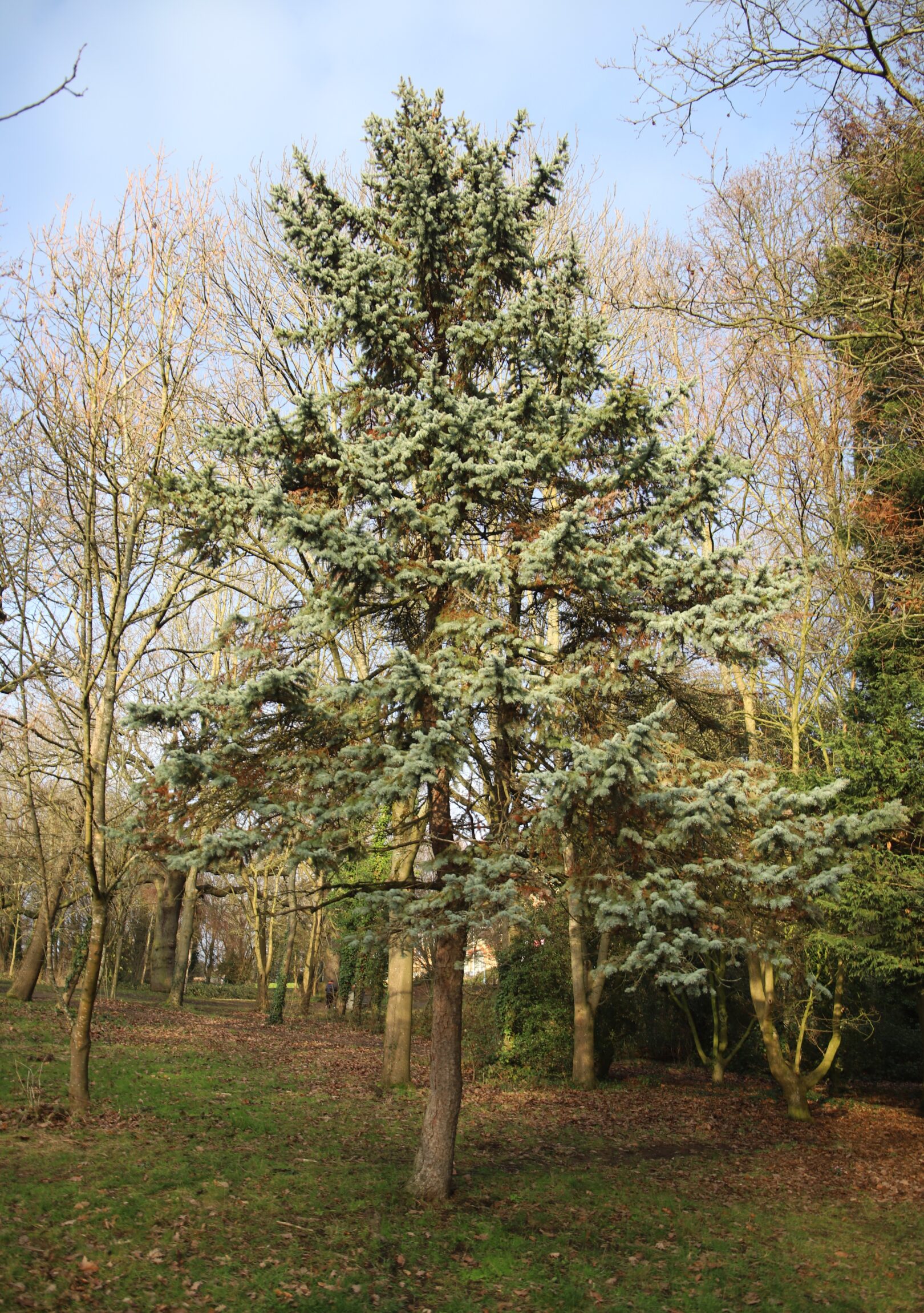
An electric blue coloured tree stands out from the crowd and marks five years of the Tree of the Month blog. Tree no. 60 is the Blue Spruce (Picea pungens). Check out earlier blogs on all subjects here on the Alexandra Palace website.
Very close to last month’s Leylandii, this tree is just a few paces up the road. The blue spruce is by the road leading down to the Paddock Car Park from Alexandra Palace Way.
In this country, the Colorado spruce (another name for this tree) can grow up to about 25m tall. In its native Rocky Mountains in the United States it can grow much taller. The natural habitat of the blue spruce is the slopes of the mountains between 2,000m and 2,500m in altitude.
Our Tree of the Month was first discovered in the 1860s by Charles Christopher Parry and appeared in the UK about 10 years later. The examples grown in this country are nearly always those specially selected for their bluish-grey colour, whereas in the wild there is a bigger range of hues from green to the colour of our tree.
The scientific name for spruces is picea, which means pitch, named after the sticky resin often found on spruce trees. The sharp tipped needles of the blue spruce give the species name of pungens (pointed). The Colorado spruce has been planted as an ornamental tree, making use of its light colouration given to it by a waxy coat on the leaves.
Native Americans used to bathe in needles soaked in hot water as a treatment for the common cold and rheumatism. The wood from this tree is relatively light and quite strong, making it useful in the building trade in North America. The blue spruce has also been used as a Christmas tree.
This is a tough tree that can survive in quite extreme weather, although it prefers well-drained soil. Other evergreens to spot nearby are (closest) a Leylandii, and then in the same direction two really tall trees, the giant sequoias, followed by a miniature monkey puzzle tree.