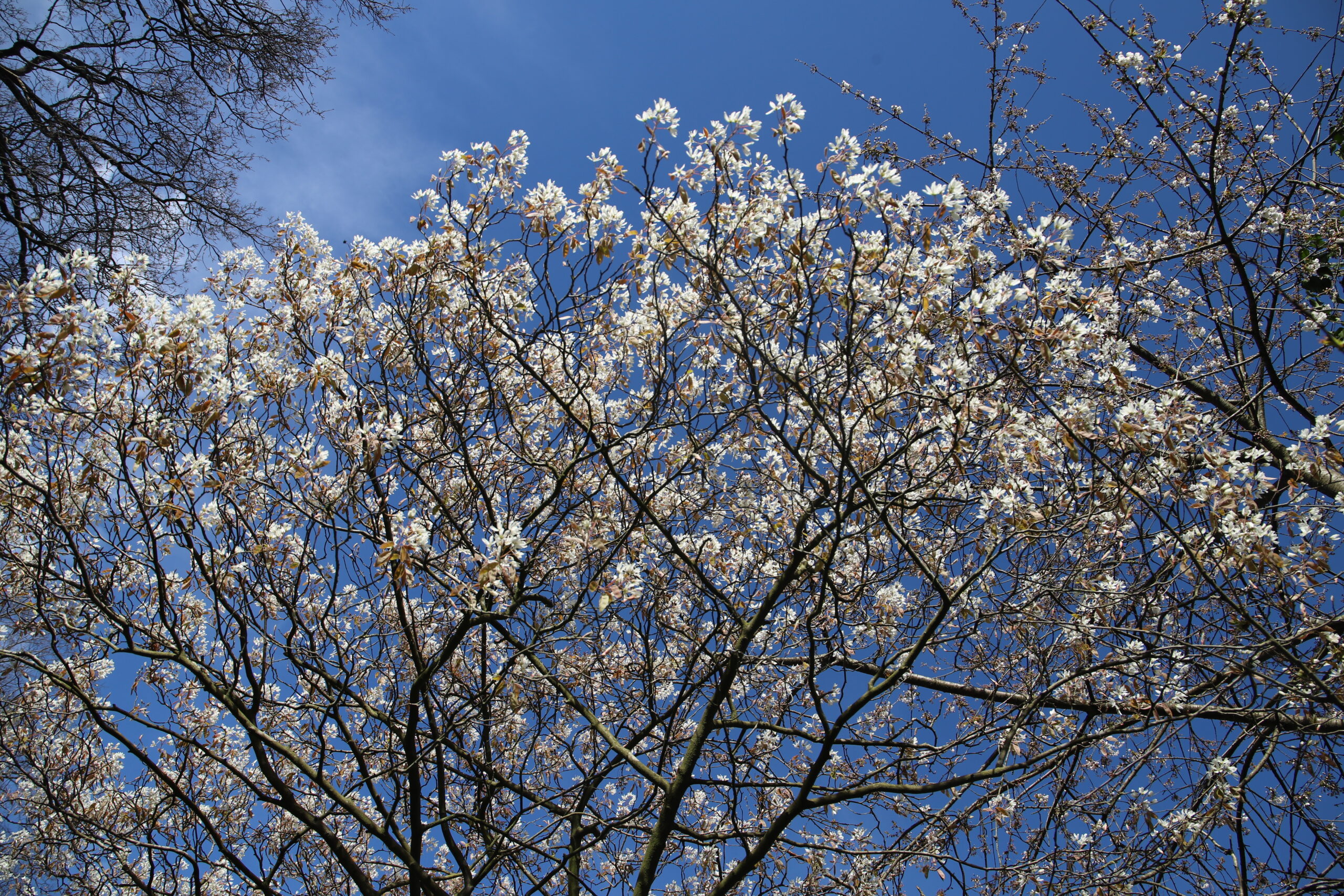
There are more than 7,000 trees in Alexandra Park and our resident expert, Stephen Middleton from The Friends of Alexandra Park, is highlighting some of his favourite species and the stories behind them.
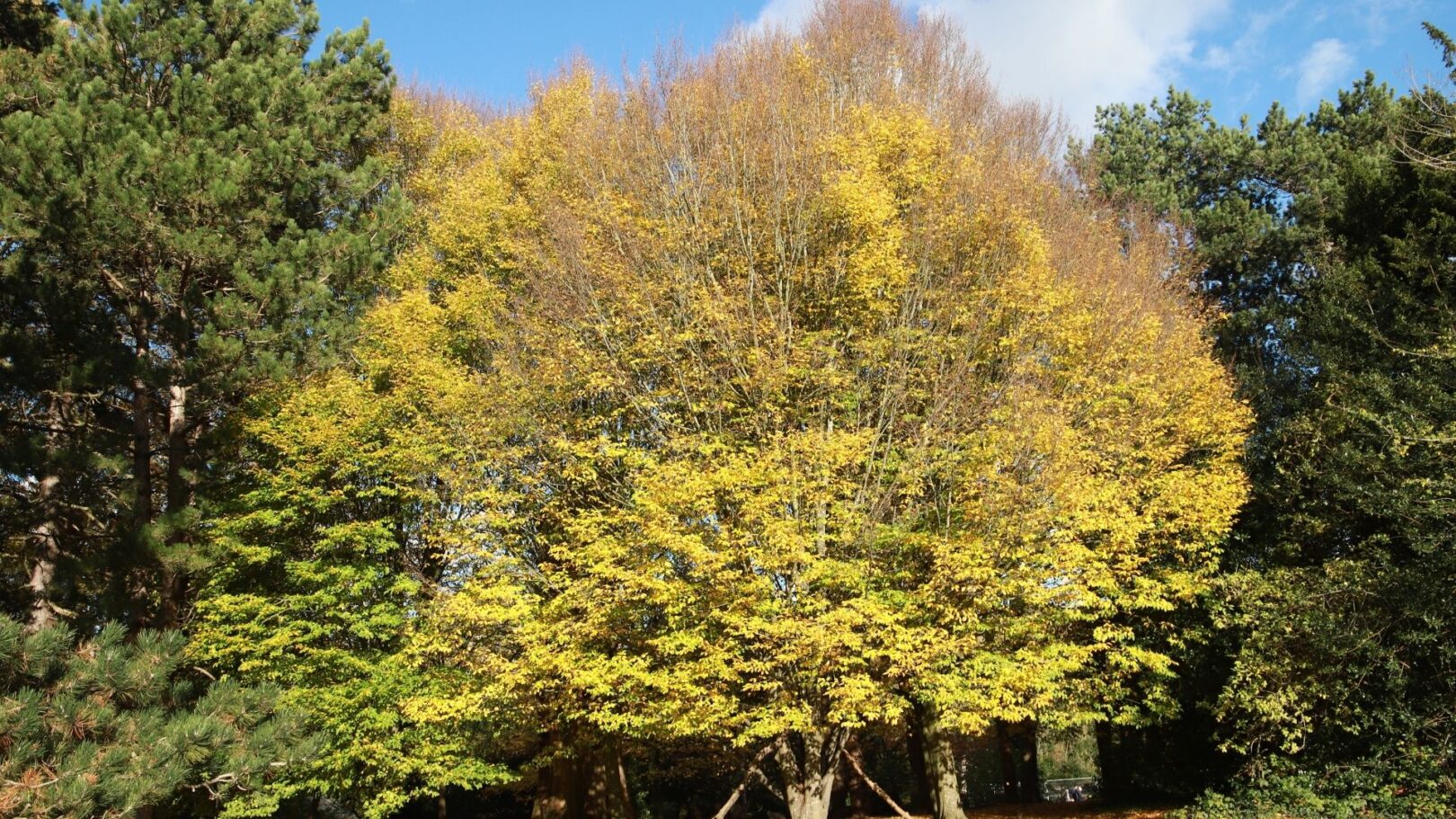
“Flames going up, water running down, muscles rippling”, all have been used to describe the wonderfully textured bark of our Tree of the Month, the Common Hornbeam (Carpinus betulus ‘Fastigiata’).
Our tree is one of many of this tulip-shaped cultivar, ‘Fastigiata’, planted in the park, a form much favoured in parks and along streets. To find our particular tree, walk directly away from the Grove Café across the grass. It stands as one of several just behind and to the left of the concrete plinth.
The hornbeam is native to the south of England and is one of the most common trees in our local native woodlands. Historically, it was grown for excellent firewood and charcoal, as it is the hardest and hottest-burning of our native woods. The name “hornbeam” reflects “horn” meaning hard (like horn), and “beam” an old word for tree.
To produce the maximum amount of timber, hornbeams were traditionally coppiced on a cycle of around 20 to 25 years. This involved cutting the tree down to just above ground level, harvesting the wood, and allowing the stump to regrow.
This exceptionally hard wood was also used for butcher’s blocks and mill cogs. Its main drawback is that it rots easily when in prolonged contact with water.
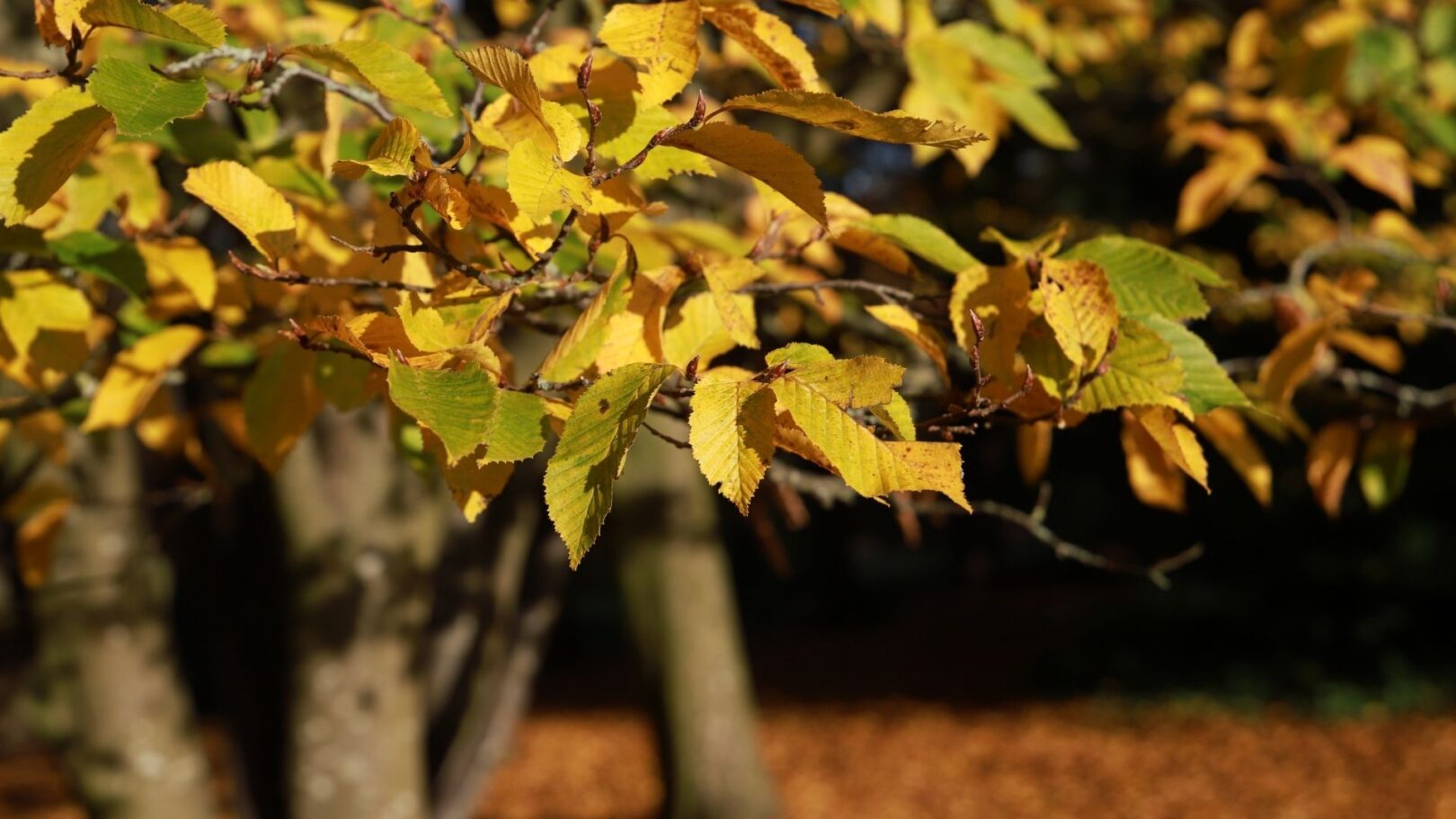
The leaves resemble those of beech, but unlike beech, hornbeam leaves have a distinctly serrated edge. When young, and when clipped as a hedge, the hornbeam retains its leaves through winter, a characteristic known as marcescence.
The seventeenth-century writer and great tree-lover, John Evelyn particularly praised an “admirable (hornbeam) espalier hedge in the long middle walk of Luxembourg Garden at Paris.”
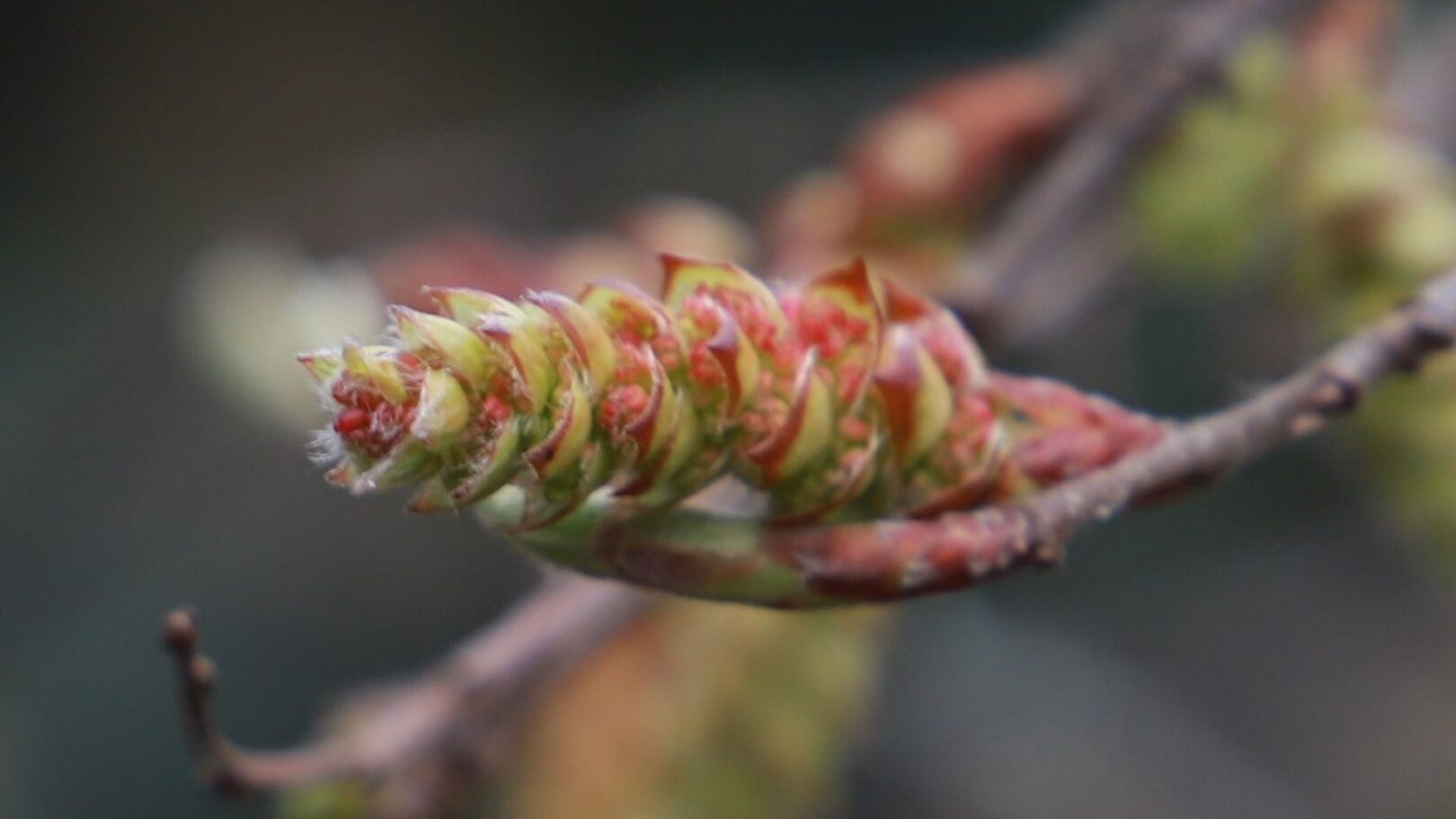
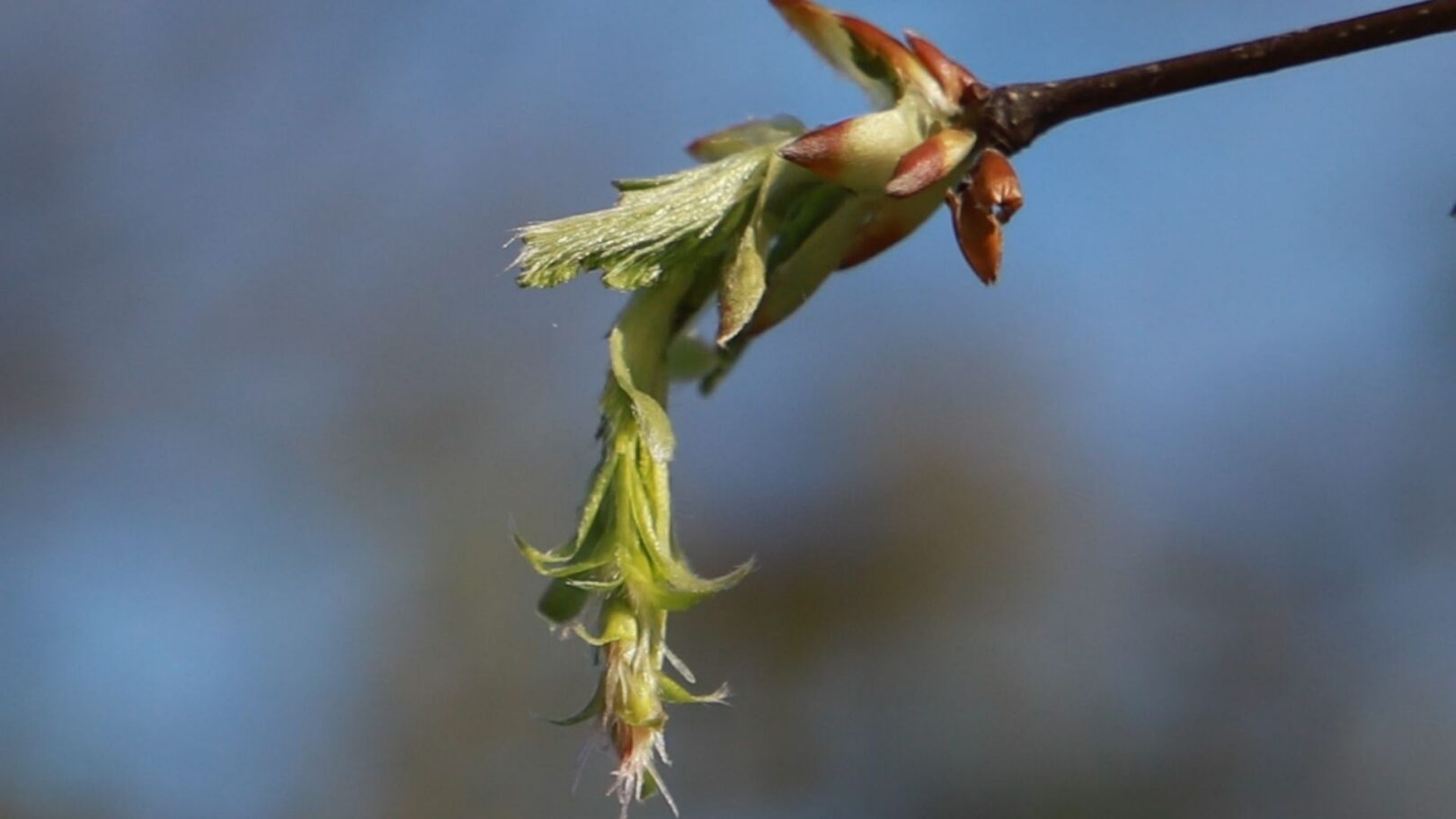
If you look at our tree now, the buds are just opening to reveal fresh new leaves, the long male catkins, while towards the tips you’ll find the more delicate female flowers. Later, these female flowers will transform into small nuts, each with three leaf-like appendages (bracts).
The ‘Fastigiata’ cultivar grows to around 4 metres in height, whereas the wild form of hornbeam can exceed 20 metres.
A phoenix tree, when a hornbeam crashes to the ground, all is not necessarily lost. Often it will not die, but instead begin to regrow, sending up fresh branches when fallen.
If you would like to learn more about the trees in the park, the Friends of Alexandra Park are holding a Tree Walk on Saturday 21 March at 11am, starting on the south side of Alexandra Palace Way by the entrance closest to Alexandra Palace Station.