Byelaws
Understanding the Alexandra Park & Palace Byelaws
Byelaws are local laws created by public bodies to manage shared spaces such as parks, markets, and transport hubs. At Alexandra Park & Palace, they form a long-standing code of conduct designed to protect the Park, its wildlife, and the experience of everyone who visits.
First introduced on 31 May 1929 under the Alexandra Park and Palace (Public Purposes) Act 1900, and updated since, they remain in force today under the authority of the London Borough of Haringey, acting as Trustees. While some of the language (and concerns!) reflect the era in which they were written, their purpose is still highly relevant: to prevent damage, nuisance, and conflict in a shared public environment.
Historically, byelaws were used by municipal authorities to regulate behaviour in public spaces, reflecting the social attitudes of their time. Today, they serve a more practical role. They provide a clear framework for balancing individual freedom with collective responsibility, helping to ensure the Park is protected, accessible, and enjoyable for everyone. In essence, they reinforce what most visitors would recognise as common sense: respect the environment, avoid causing harm or disturbance, and help preserve Alexandra Park for future generations.


The full byelaws
This notice sets out the byelaws made on the 31st May 1929 by the Alexandra Park Trustees under Section 18 of the Alexandra Park and Palace (Public Purposes) Act 1900 and allowed by the Ministry of Health on the 11th June 1929, as amended by bye-laws made by the Trustees on the 6th September 1938 and allowed by the Ministry of Health on the 23rd September 1938 and further amended by Section 31 of the Criminal Justice Act 1977. By virtue of the Alexandra Park and Palace Order 1966 and the Ministry of Housing and Local Government Provisional Order Confirmation (Greater London Parks and Open Spaces) Act 1967 the Trustees are now the Mayor and Burgesses of the London Borough of Haringey and the bye‑laws take effect as if made by them.
- Throughout these byelaws the expression “the Trustees” means the Alexandra Park and Palace (Public Purposes) Act, 1900; the expression “the Park and Palace” means all the lands, buildings, and hereditaments known as the Alexandra Park and Palace and defined by Section 2 of the above‑mentioned Statute. Provided that these byelaws shall not be deemed to apply to that portion of the Park which is now let as a race‑course until the expiration or other sooner determination of the existing tenancy thereof.
- The provisions contained in the paragraphs numbered (4), (8), (10), (13), (14), (15) and (22) of the byelaw numbered 3 (three) shall not be deemed to apply to any officer of the Trustees in the proper execution of his duty or to any person or servant of any person employed by the Trustees in the proper execution of any work in connection with the laying out or maintenance of the Park and Palace.
- The acts and things specified in the following paragraphs numbered (1) to (34) respectively are hereby prohibited in the Park and Palace and declared to be offences.
- Where the Trustees set apart a sanitary convenience for the use of one sex, as indicated by a notice affixed or set up in a conspicuous position near to such sanitary convenience, a person of the opposite sex shall not improperly enter to use such sanitary convenience.
- Every person who shall offend against any of the foregoing byelaws shall be liable for every such offence to a penalty of fifty pounds. Provided nevertheless, that a Justices or Court before whom any complaint may be made or any proceedings may be taken in respect of any such offence may, if they think fit, adjudge the payment, as a penalty, of any sum less than the full amount of the penalty imposed by this byelaw.
Provided also that a penalty shall not be recoverable under these byelaws where an offence is committed against the Metropolitan Police Act 1839.
(1)
Removing, injuring or in any way interfering with any fountain, monument, bust, post, chain, railing, fence, wall, seat, barrier, gate, lamp, lamp‑post, light, illumination, notice‑board or plate, fire appliances, watch box, house, building, shed, urinal, water-closet, military or other flag, mark or signal, magazine, rifle butt, signal, mantlet, military appliance, or other matter or thing, or defacing or disfiguring the same by posting or affixing in any way any bill, placard, or notice, or by cutting or writing, stamping, printing or marking thereon.
(2)
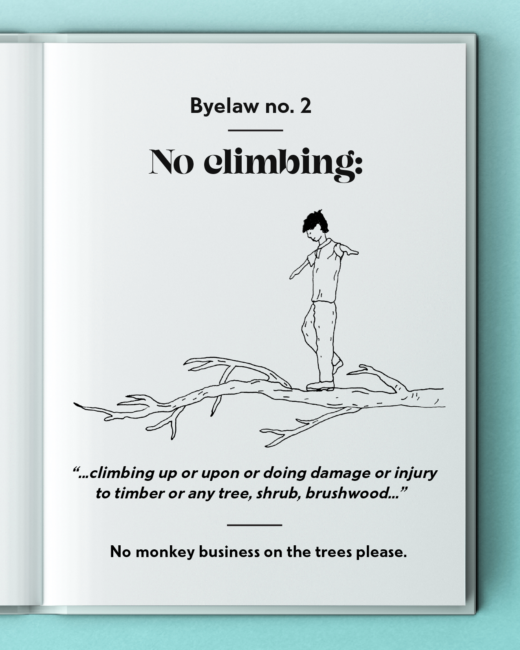
Cutting, digging up, felling, plucking, breaking, climbing up or upon or doing damage or injury to timber or any tree, shrub, brushwood, fencing post, pole, gorse, heather, furze, fern, turf, grass, flower, or other plant.
(3)
Taking, digging, cutting, breaking, damaging or removing any gravel, sand, sod, bog‑earth, clay, turf, mould, soil, water, ice or other substance, except in pursuance of some lawful right or privilege.
(4)
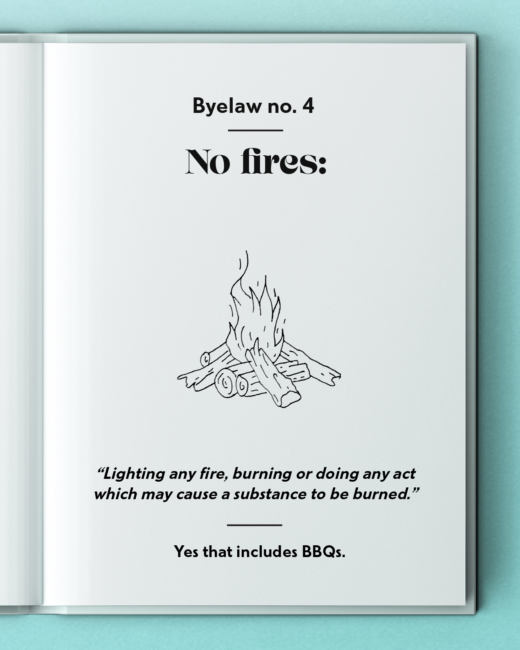
Lighting any fire, burning or doing any act which might cause any timber, wood, brushwood, gorse, heather, furze, fern, earth, paper, rubbish, or other substance, to be burned.
(5)
Going or attempting to go into any enclosed plantation or temporary enclosure or walking or running over standing, sitting or lying on any part of any flower‑bed or any shrub, underwood, gorse, or other plant or any ground in course of preparation or cultivation as a flower‑bed or for the reception or growth of any tree, sapling underwood, gorse, or other plant.
(6)
Going or attempting to go on the ice on any pond or lake when it is frozen, after notice that the ice is dangerous has been affixed in a prominent place by the Trustees’ Officer or the Police.
(7)
Committing an encroachment or making any enclosure.
(8)
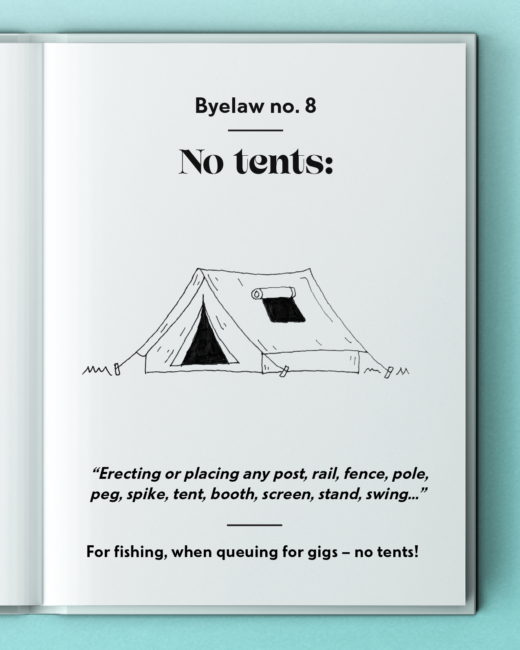
Erecting or placing any photographic apparatus for trade purposes or any post, rail, fence, pole, peg, spike, tent, booth, screen, stand, swing, or other building or erection of any kind whatsoever without the written consent of the Trustees.
(9)
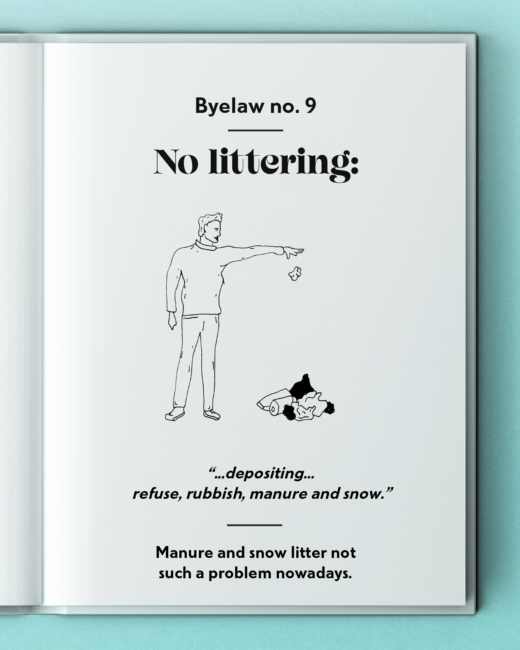
Depositing or leaving any timber, bricks, sand, stone, refuse, rubbish manure, snow, dead animal, or other matter or thing except in a receptacle provided for the purpose of any paper such as is likely to affect or tend to affect injuriously the amenities of the Park and Palace.
(10)
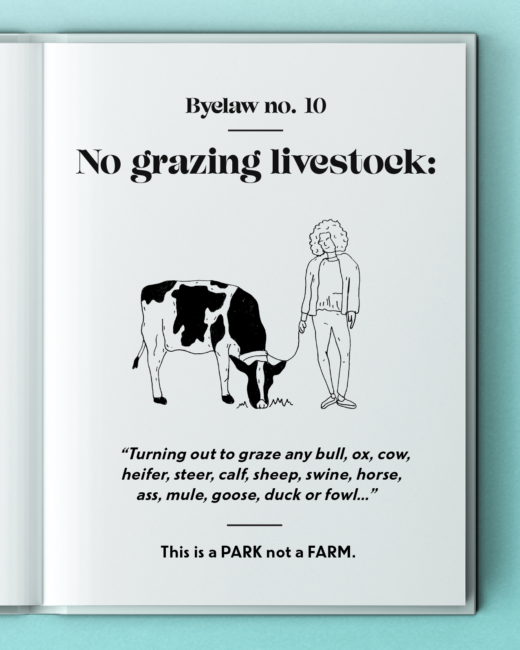
Turning out to graze or feed any bull, ox, cow, heifer, steer, calf, sheep, swine, horse, ass, mule, goose, duck, fowl or other animal without right or the written consent of the Trustees
(11)
Construction or laying any sewer, drainpipe or waterway or other matter of like nature.
(12)
Making or forming a new road or path
(13)
Drawing, driving or propelling at a rate exceeding eight miles per hour, or so as to endanger the public or without the written consent of the Trustees, drawing, driving, propelling, standing or placing on or across the turf or ground other than that laid out for vehicular traffic, on or over any footpath or in any shrubbery, any gun or gun‑carriage, limber or wagon cart, carriage, van, velocipede, bicycle, tricycle, truck, wheel‑barrow, or vehicle or using for heavy traffic any road on which adequate notice is placed restricting its use to light traffic or learning or teaching the driving of any motor vehicle or failing to give audible warning when overtaking any person. Provided that the rate of miles per hour limited by this byelaw shall as regards motor vehicles be 20 and as regards bicycles and tricycles be 10 in lieu of 8.
(14)
Riding any horse above the rate of eight miles per hour or so as to endanger the public except in case of accident or other sufficient cause, or leading from horse‑back another horse on which there is not rider, or riding, leading, lunging or breaking in any horse, ass, mule or other animal except in any part set apart by the Trustees for the purpose and indicated by adequate notice.
(15)
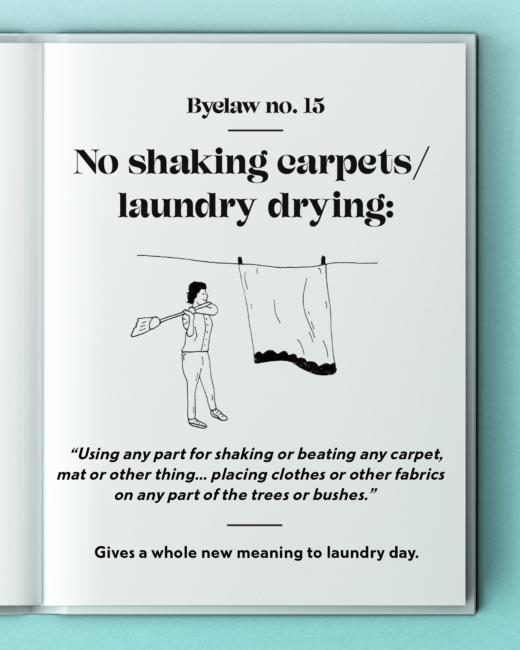
Using any part for shaking or beating any carpet, mat or other thing, or drying or bleaching clothes or other fabric, placing clothes or other fabrics on any part of the trees or bushes, or on or overhanging the turf, grass or ground, or for shaking, beating, or brushing any carpet, mat or other thing.
(16)
Washing clothes or other things in any lake, pond or trough or doing any act likely to cause the pollution of the water in any drinking fountain.
(17)
Bathing or washing any dog or other animal, or allowing any dog or other animal to swim in any lake or pond.
(18)
Sorting, rags, bones or other matter of like nature.
(19)
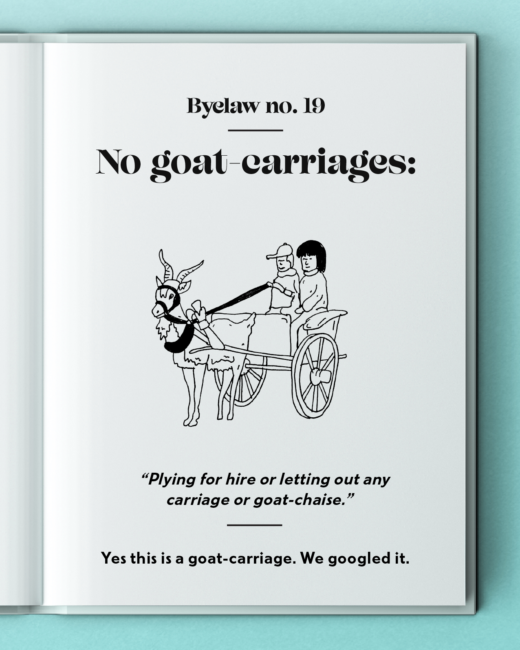
Plying for hire with, or letting out any horse, pony, mule, ass, goat or other animal or any carriage or goat‑chaise without the written consent of the Trustees.
(20)
Plying for hire with, or letting out any horse, pony, mule, ass, goat or other animal or any carriage or goat‑chaise without the written consent of the Trustees.
(21)
Bird‑catching, bird‑trapping or laying or placing any net or trap for the taking of birds, taking birds’ eggs or nests, or shooting or chasing, or attempting to shoot or chase any bird, game or animal or throwing any stone or stick or other missile with intent to injure or catch any bird, game or animal or in any other way interfering with fish, water‑fowl or other animal or fishing without the written consent of the Trustees. Provided that the foregoing byelaw shall not be deemed to apply in any case where an offence is committed against the Malicious Damage Act 1861.
(22)
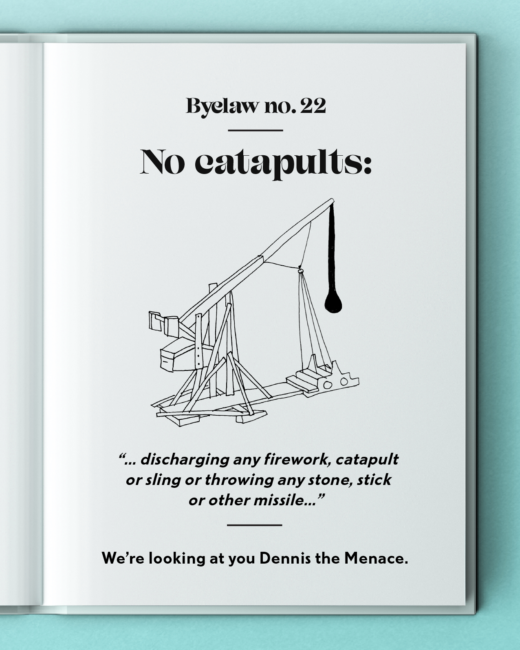
Firing any gun, pistol, revolver or other fire‑arm, loitering with any fire‑arm, discharging any firework, catapult or sling or throwing any stone, stick or other missile, or using any syringe, squirt or other instrument.
(23)
Wilfully obstructing, disturbing, interrupting or annoying any person in the proper use of the Park and Palace, or behaving in any indecent or disorderly manner.
(24)
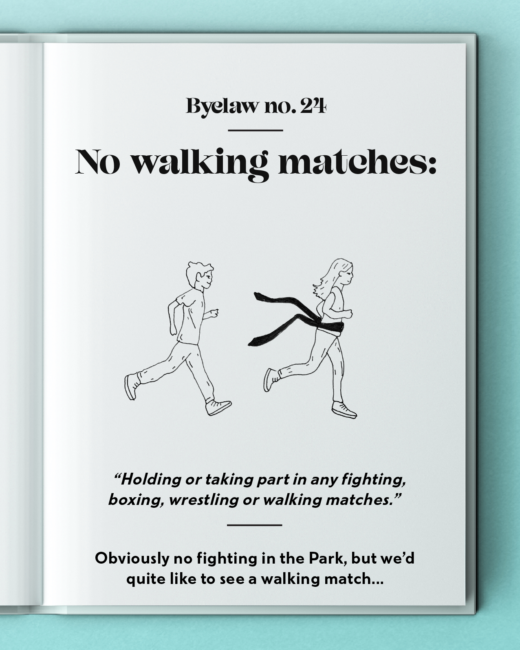
Holding or taking part in any running, fighting, boxing, wrestling or walking match except with the written consent of the Trustees.
(25)
Soiling or defiling any building, tree, shrub, wall, railing, fence, magazine, butt, mantlet, seat or other thing or the water in any pond or lake.
(26)
Soiling or defiling any building, tree, shrub, wall, railing, fence, magazine, butt, mantlet, seat or other thing or the water in any pond or lake.
(27)
Soiling or defiling any building, tree, shrub, wall, railing, fence, magazine, butt, mantlet, seat or other thing or the water in any pond or lake.
(28)
Practising gymnastics, playing or making preparation to play any game, taking part in any sport, entertainment, or dancing, bathing, washing, boating or sailing any model yacht without the written consent of the Trustees except on the parts or places respectively set apart therefore.
(29)
Delivering, uttering or reading any public speech, lecture, prayer, scripture, sermon, or address of any kind or description whatever, or to the annoyance of any person singing any sacred or secular song, playing or making sounds or any musical instrument, entering into any public discussion, or holding or causing or taking part in any public assemblage without the written consent of the Trustees.
(30)
Interfering with, obstructing or annoying any person or persons who, with the written consent of the Trustees, or in pursuance of any of these byelaws, or any general authority or Act of Parliament, are engaged in military exercises, or are playing or have made preparation to play any lawful game, or are riding, skating, fishing, playing music or delivering any public address.
(31)
Resisting, or aiding or inciting any person to obstruct or resist any Officer of the Trustees or other person in the execution of his duty or the lawful exercise of any authority under these byelaws.
(32)
Taking into or having any dog or dogs not led by a chain or string or other sufficient fastening or taking into or having in any enclosed place where notices prohibiting the admission of dogs are exhibited any dog or dogs.
(33)
Taking into or driving any omnibus, cart, business conveyance, wheelbarrow, or truck without the written consent of the Trustees.
(34)
(a) Occupying any seat if in a verminous or offensively filthy condition.
(b) Lying about if in a verminous or offensively filthy condition.