There are more than 7,000 trees in Alexandra Park and our resident expert, Stephen Middleton from The Friends of Alexandra Park – who celebrate their 20th anniversary with a special event in The Grove on 28 June – is introducing some of his favourites…
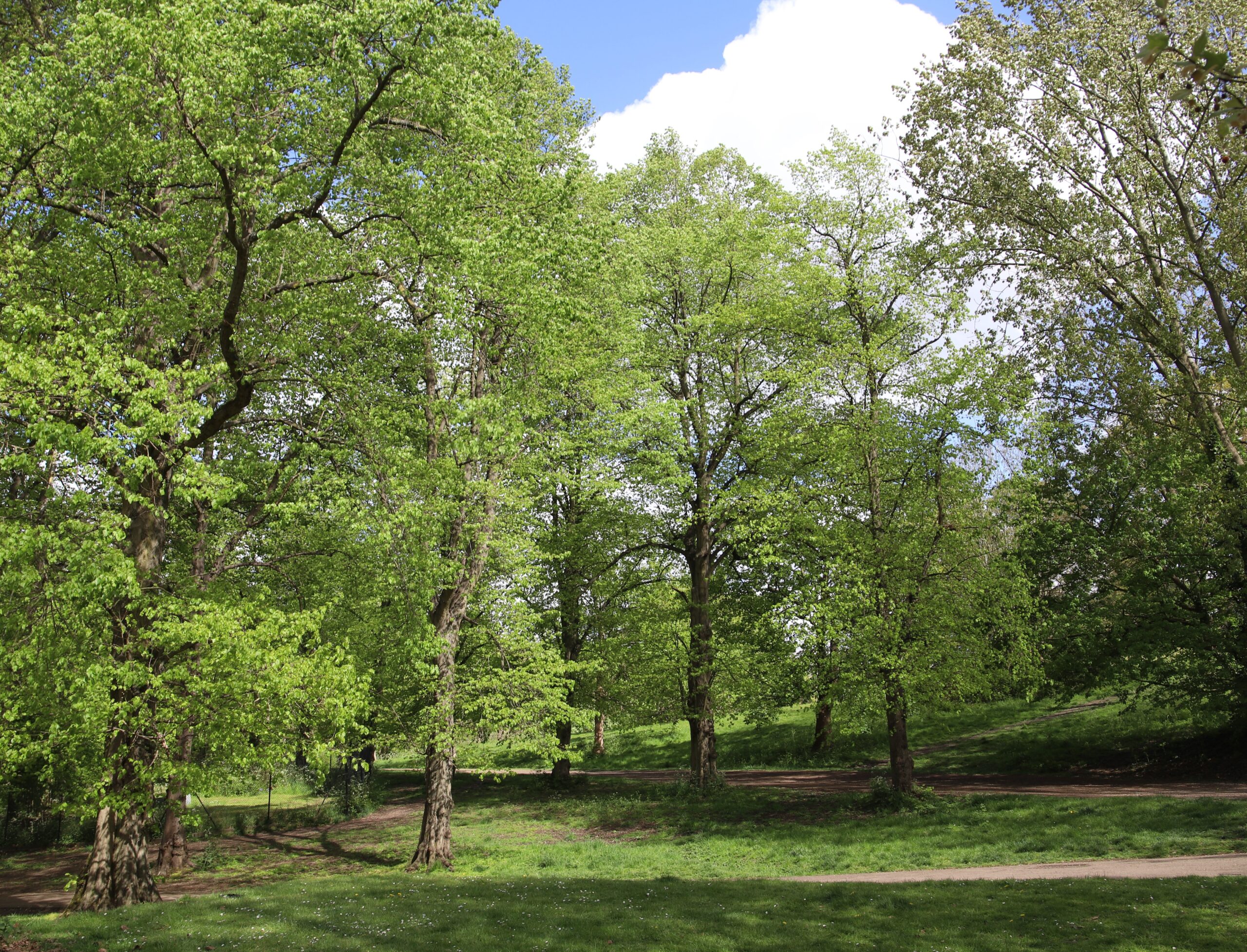
Cursed by many car owners, the leaves of our Tree of the Month, the Common Lime (Tilia x europaea), attract large numbers of aphids which can drip their honeydew sticky secretions on cars unwisely parked underneath.
However, our specific tree is not on a public road, but located at the crossroads at the corner of the two old deer enclosures with the steep path up towards the East Court and the exit to Alexandra Park Road. It is at the northern corner of this junction.
The common lime is a hybrid of two native limes, the small leaved lime and the large leaved lime. It occasionally hybridises naturally, but it is usually bred commercially. Limes are not related to citrus trees and the old name Linden is perhaps a better one.
This is our tallest broadleaf tree (not a conifer) reaching up to 40metres high. On the negative side, the common lime tends to sucker from the base, the bottom of the tree often has a large amount of leaves sprouting. The aphid honeydew can also attract a sooty mold which can turn the leaves a black colour. On the plus side the common lime resists pollution and is cheap to propagate which goes some way to explain its popularity. Nowadays the small leaved lime is becoming a preferred option as it is not prone to suckering.
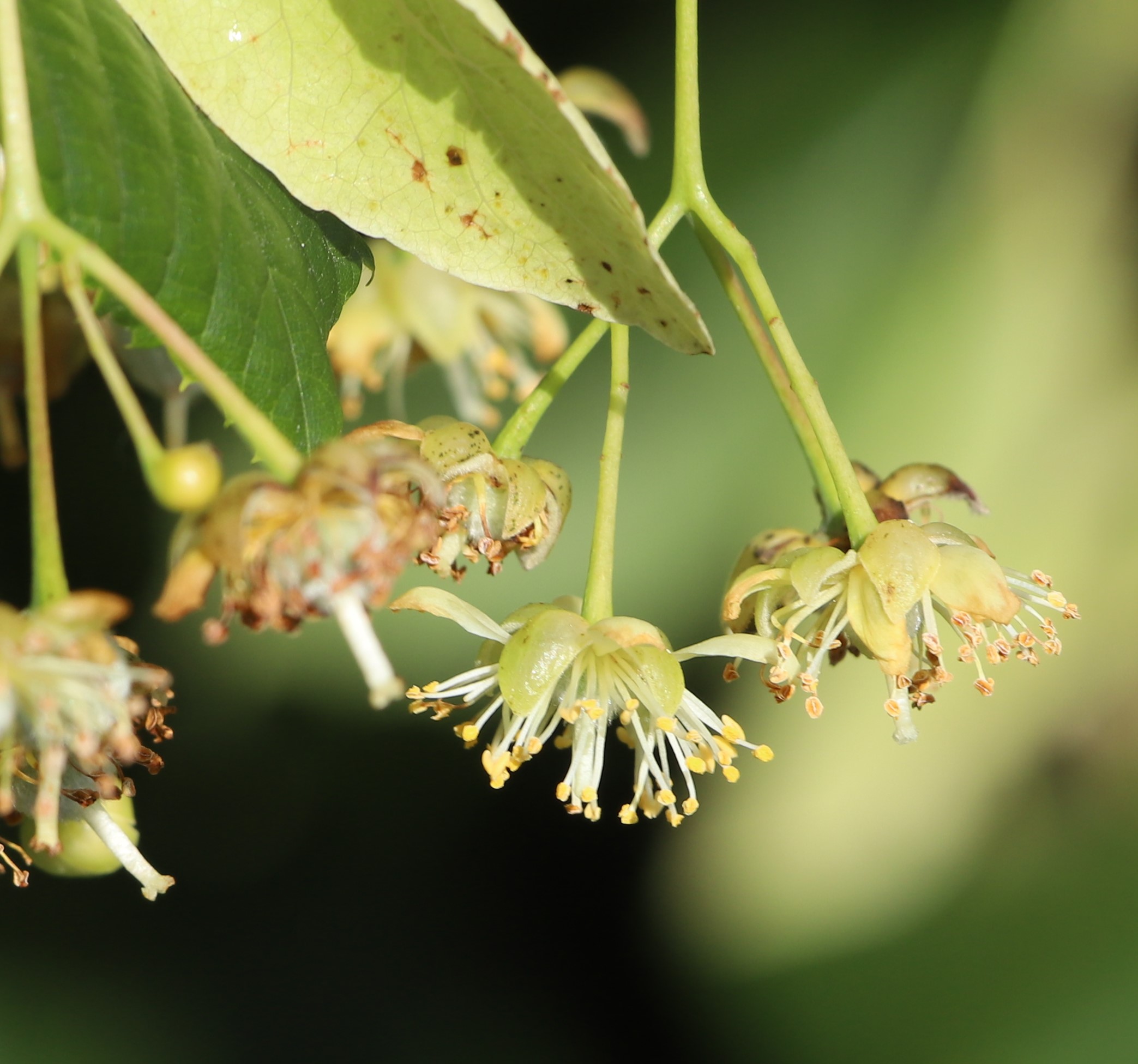
“The Lime, a summer home of murmurous wings.” a line from The Gardener’s Daughter by the poet, Lord Alfred Tennyson. This refers to the love of bees for the lime flowers. From each flower stalk hang between four and ten flowers and also a long thin leaf-like structure called a bract. It is not only the bees that like the flowers, humans enjoy the honey they make and also use the blossom to make a herbal tea called tisane which is said to help with the common cold.
Later, when pollinated, the flowers change into little round slightly furry balls with faint ridges.
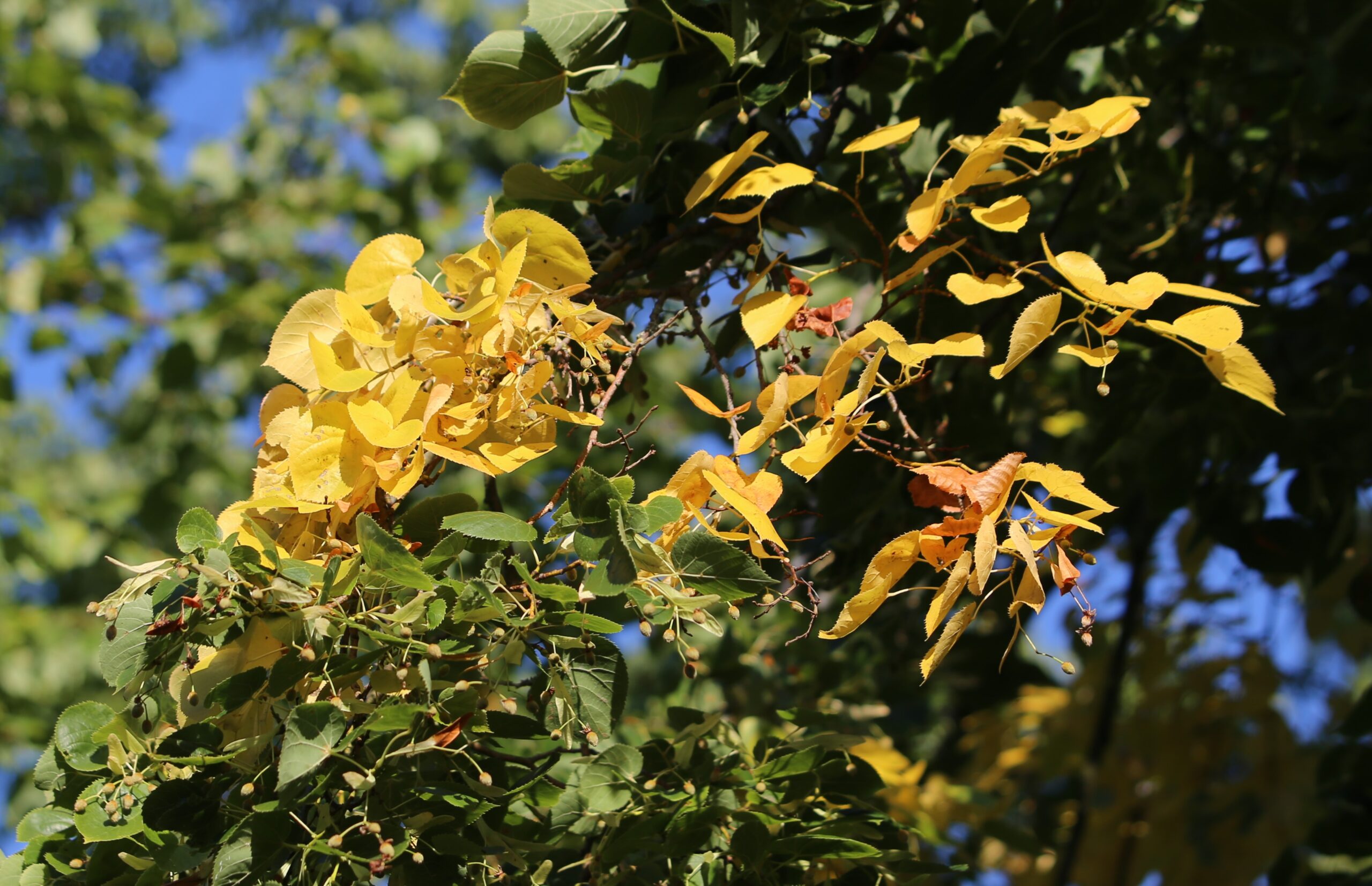
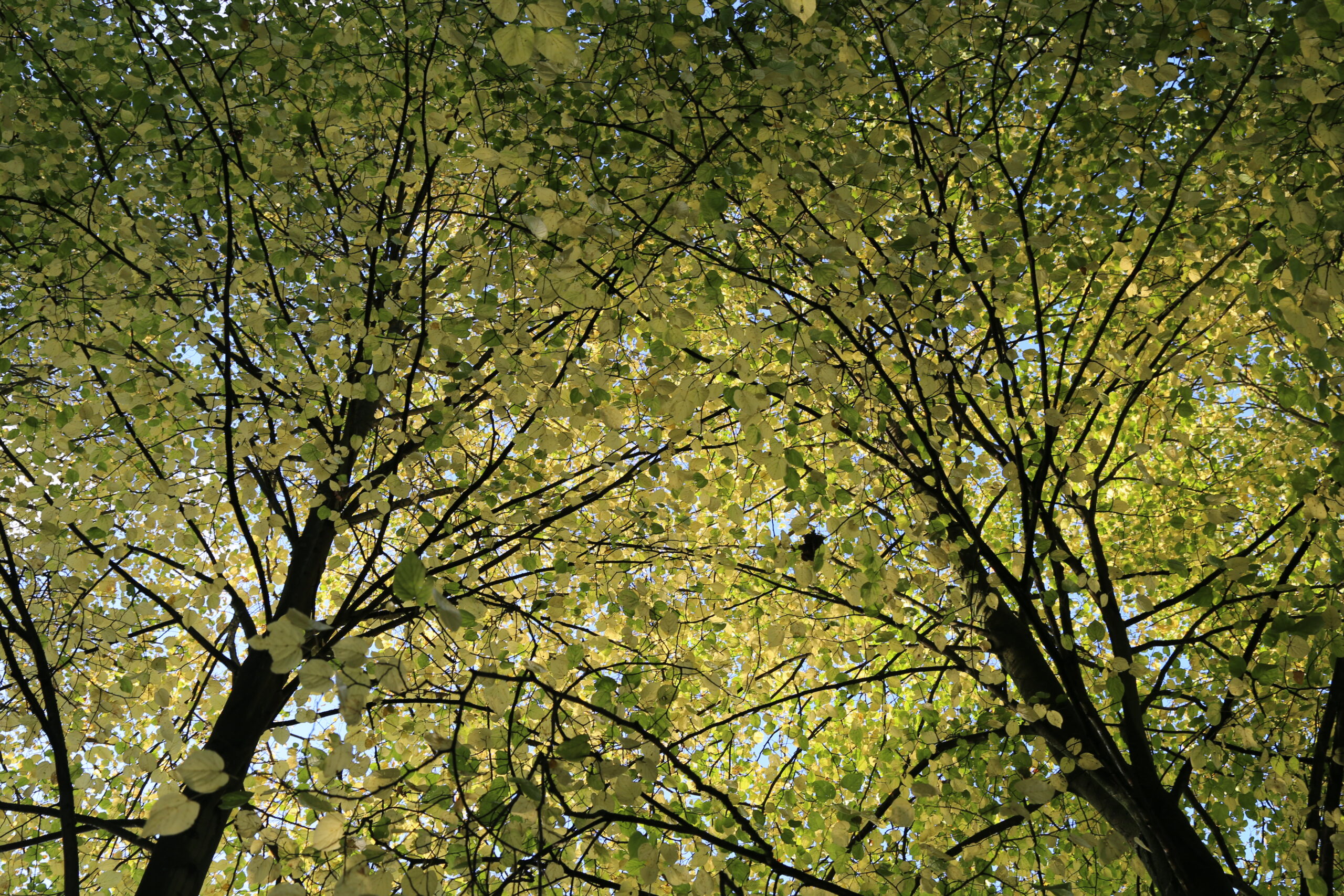
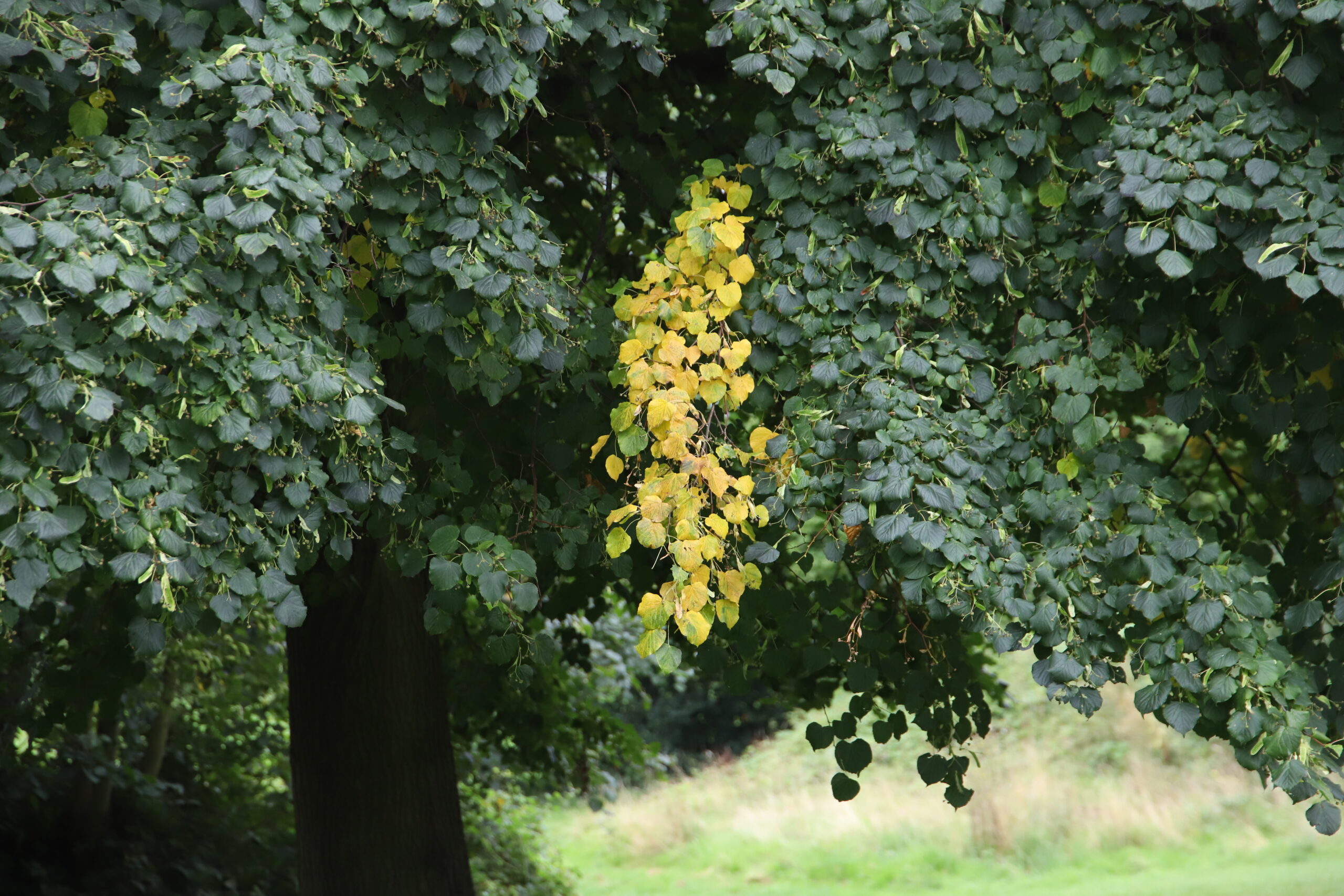
The Common Lime’s leaves are serrated, heart shaped and slightly non symmetrical.
In early autumn our tree of the month is one of the earliest trees to start turning yellow, often in distinct patches on a given tree.
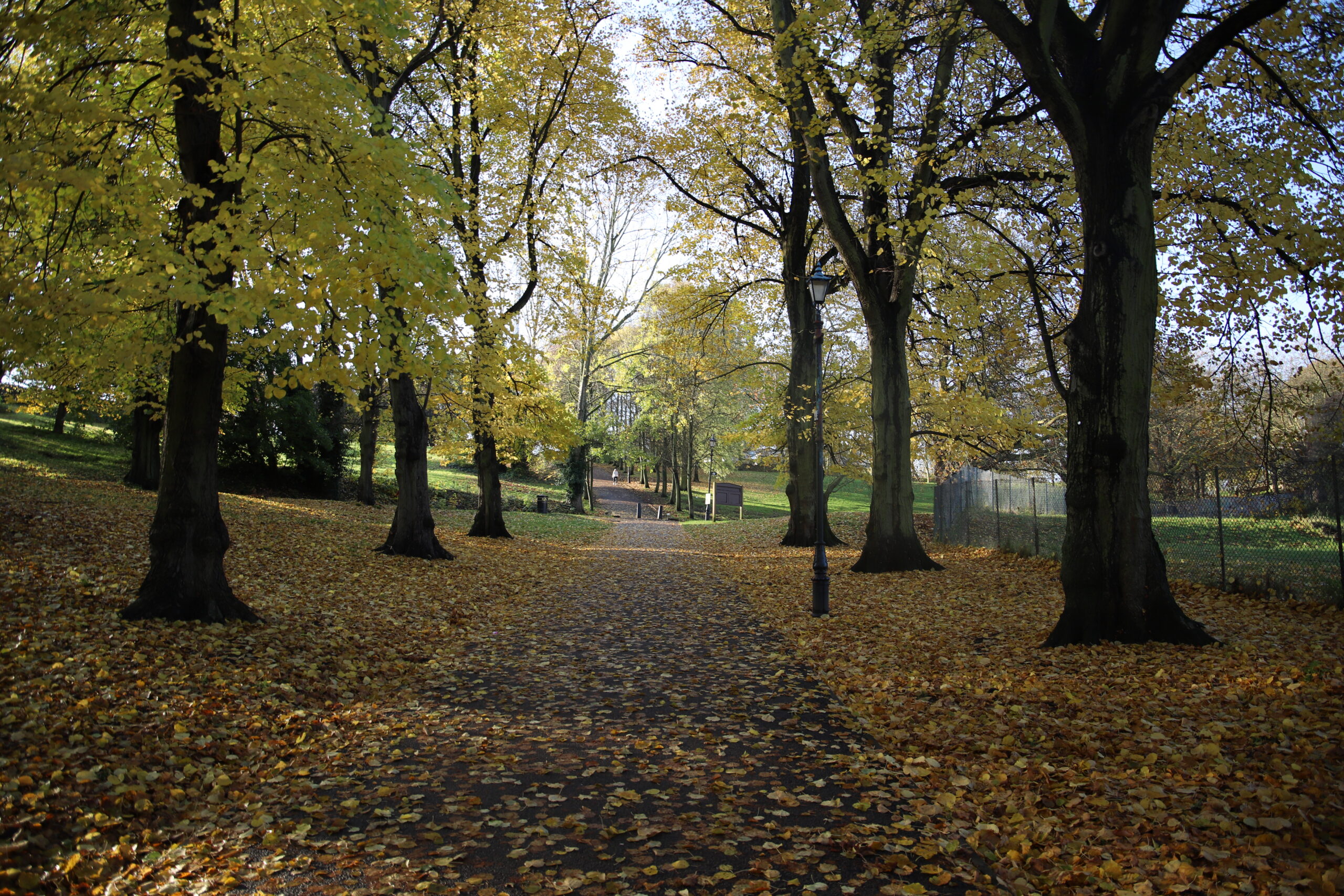
The wood is close grained and good for carving, it was often used to create wooden decorations in churches. Look out for the lime avenues extending from this crossroads in three of the four
directions – the odd one leads to the boating lake and is lined by London planes.